

Traditional architectural lighting installation has long been plagued by bulky wiring structures, scattered signal lines and complicated on-site debugging. Large-scale building facade lighting, landscape lighting and indoor commercial lighting usually require dozens of independent signal loops. Too many cables not only increase construction difficulty and material costs, but also cause hidden dangers such as signal attenuation and line aging. With the continuous upgrading of network lighting control technology, modern network control equipment has completely changed the traditional wiring mode, greatly simplifying the overall installation process of architectural lighting projects.
The popularization of professionalArtnet Controller is the core reason for the simplification of modern lighting wiring. Different from traditional DMX signal equipment that requires one-to-one wiring, network-based control devices support multi-channel signal transmission through a single network cable. It can centrally manage multiple lighting areas and multiple lamp groups at the same time, abandoning the cumbersome daisy-chain wiring structure. This highly integrated transmission method greatly reduces the total number of on-site cables, makes the construction layout more concise, and effectively lowers the technical threshold of large-scale lighting installation.
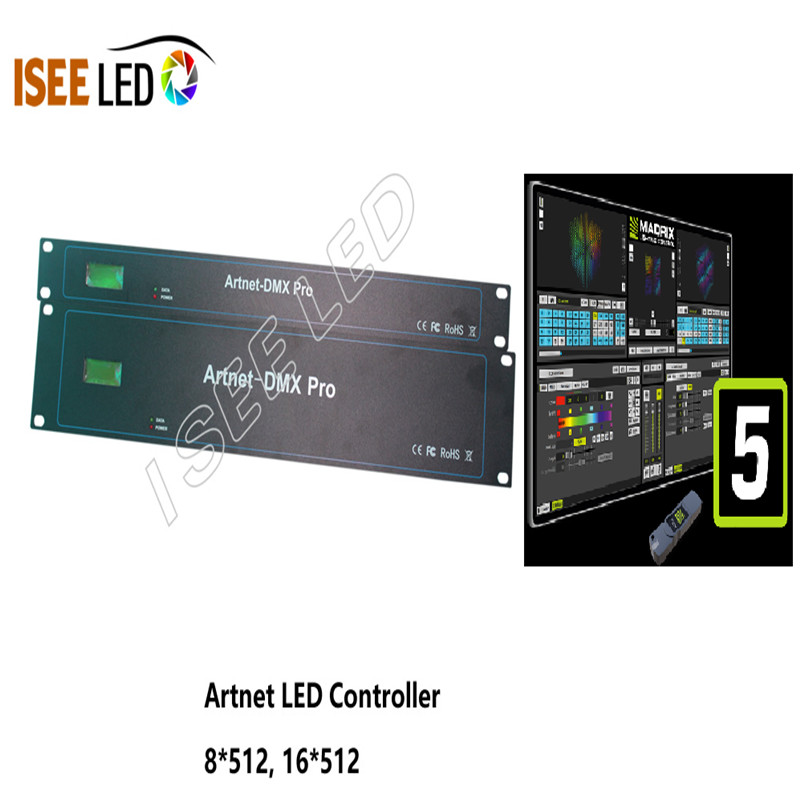
In practical architectural engineering, most decorative LED lighting equipment needs precise address programming and synchronous signal control. The optimized Artnet Led Controller is specially designed for various flexible and fixed LED lighting fixtures. It supports stable network signal output and intelligent loop division, which can perfectly adapt to complex building structures and scattered lamp distribution. Without laying a large number of independent signal lines for each lamp group, construction personnel can complete system networking in a more efficient way, greatly shortening the wiring cycle of the entire project.
In addition, the network control architecture has strong scalability. When the project needs to add new lighting areas or adjust lighting effects, engineers only need to expand the network equipment without re-laying a large number of cables. This flexible and efficient installation mode not only saves construction costs, but also improves the overall intelligence and professionalism of architectural lighting engineering, becoming the mainstream solution for modern high-end building lighting projects.