
Lighting system commissioning is the most critical and time-consuming stage in modern architectural lighting, stage performance and commercial decorative projects. Traditional commissioning methods rely on manual code adjustment and repeated signal testing, which frequently results in channel conflicts, disordered light effects and low construction efficiency. With the continuous upgrading of intelligent lighting technology, professional portable debugging tools have greatly optimized the whole commissioning process, helping engineering teams achieve standardized, fast and accurate lighting system setup on site.
Modern lighting projects highly depend on stable and precise signal scheduling from DMX512 Controller devices. However, inconsistent address settings are the main reason why entire lighting systems fail to operate synchronously. Manual configuration cannot guarantee uniform coding standards, which often leads to delayed signal response and flickering lights. Advanced portable debugging equipment solves this problem perfectly by supporting one-click batch coding, automatically matching the signal protocol of mainstream controllers, and ensuring seamless signal connection between control terminals and lighting equipment.
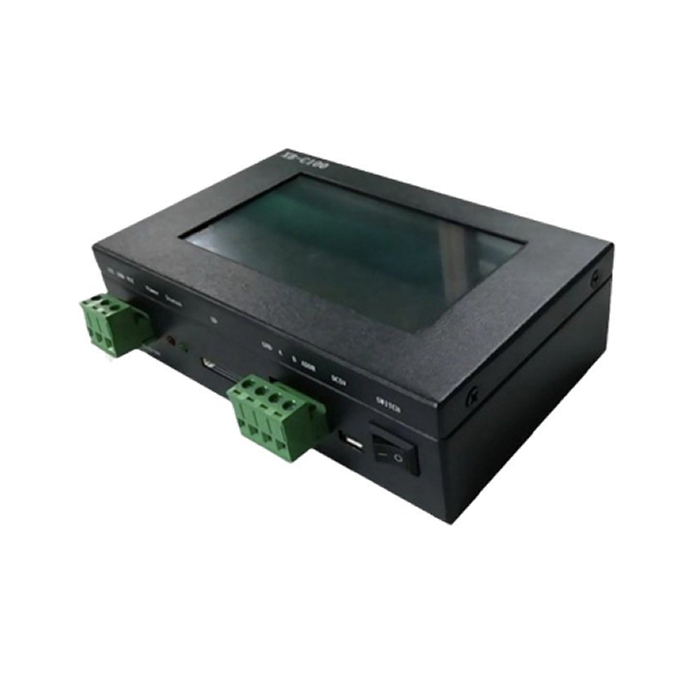
Large-scale landscape and stage projects usually adopt dense arrangements of LED Pixel Light units, which raise higher requirements for address uniformity and channel classification. Each pixel point needs an independent and unique address to realize dynamic color changing, gradient flowing and pattern switching effects. Traditional manual debugging requires massive repetitive work and is extremely prone to errors. Professional on-site debugging tools can quickly identify lamp channel modes and complete unified address programming in a short time, greatly improving the accuracy of pixel lighting system commissioning.
The popularization of intelligent lighting systems has further promoted the application of RDM Lighting Control technology in engineering construction. Compared with traditional single-way DMX signal transmission, RDM supports two-way signal feedback, allowing technicians to monitor equipment status, detect abnormal channels and modify parameters in real time. Integrated portable debugging equipment perfectly connects with RDM systems, realizing intelligent inspection and precise calibration during commissioning, which greatly improves the overall stability and intelligibility of lighting engineering.
Apart from improving commissioning efficiency, intelligent debugging tools also effectively reduce project costs and maintenance pressure. Traditional debugging requires repeated wiring, system restart and artificial troubleshooting, which wastes plenty of labor and time. The optimized working process supports offline programming and high-altitude operation, adapting to various complex construction environments. After the project is completed, later equipment replacement and system upgrading can also be finished quickly without overall secondary debugging.